In a city where a broken air conditioner in July isn't an inconvenience, it's a genuine safety issue, Arizona law is specific about which repair obligations belong to the landlord and which ones can be shifted elsewhere. Some of these duties can never be delegated to a tenant, no matter what the lease says, and knowing exactly where that line sits matters more here than in almost any other climate in the country, especially once a repair dispute actually ends up in front of a judge.
Key Takeaways
Arizona law under A.R.S. 33-1324 requires landlords to comply with health and safety building codes and keep the premises fit and habitable, duties that can never be shifted to a tenant by agreement.
Landlords must also maintain electrical, plumbing, heating, and cooling systems in good working order, keep common areas clean and safe, and provide for waste removal.
Cooling and heating are treated as essential services under Arizona law, which gives tenants faster, more direct remedies if they fail.
For single-family homes specifically, landlords and tenants can agree in writing to shift certain maintenance tasks to the tenant, but only for a limited set of duties, never the core code-compliance and habitability obligations.
A tenant facing a landlord who won't make a required repair has several options, including fixing minor defects and deducting the cost, or in some cases terminating the lease entirely.
The Duties Landlords Can Never Delegate
Under Arizona Revised Statutes Section 33-1324, landlords are required to comply with building codes materially affecting health and safety, and to make all repairs necessary to keep the property fit and habitable. These two obligations sit at the core of the statute, and Arizona law explicitly prevents landlords from shifting them onto a tenant through a lease agreement, no matter how the lease is worded or how much the tenant might be willing to take on.
Beyond these two, the statute also requires landlords to keep common areas clean and safe, maintain electrical, plumbing, sanitary, heating, ventilating, and air-conditioning systems in good working order, and provide and maintain trash receptacles with arranged removal.
Cooling and Heating Are Treated as Essential Services
Given Chandler's summer heat, this is the part of Arizona's landlord-tenant framework that carries the most real-world weight locally. Arizona law treats a functioning cooling system with the same urgency as running water, since a prolonged AC outage during a Sonoran Desert summer isn't a comfort issue, it's a health and safety one.
When a landlord wrongfully fails to supply an essential service like air conditioning, heat, or water, tenants have access to faster, more direct remedies than a standard repair dispute would allow, including the ability to procure the service themselves and deduct the cost, or secure alternative housing during the outage and deduct the difference from rent.
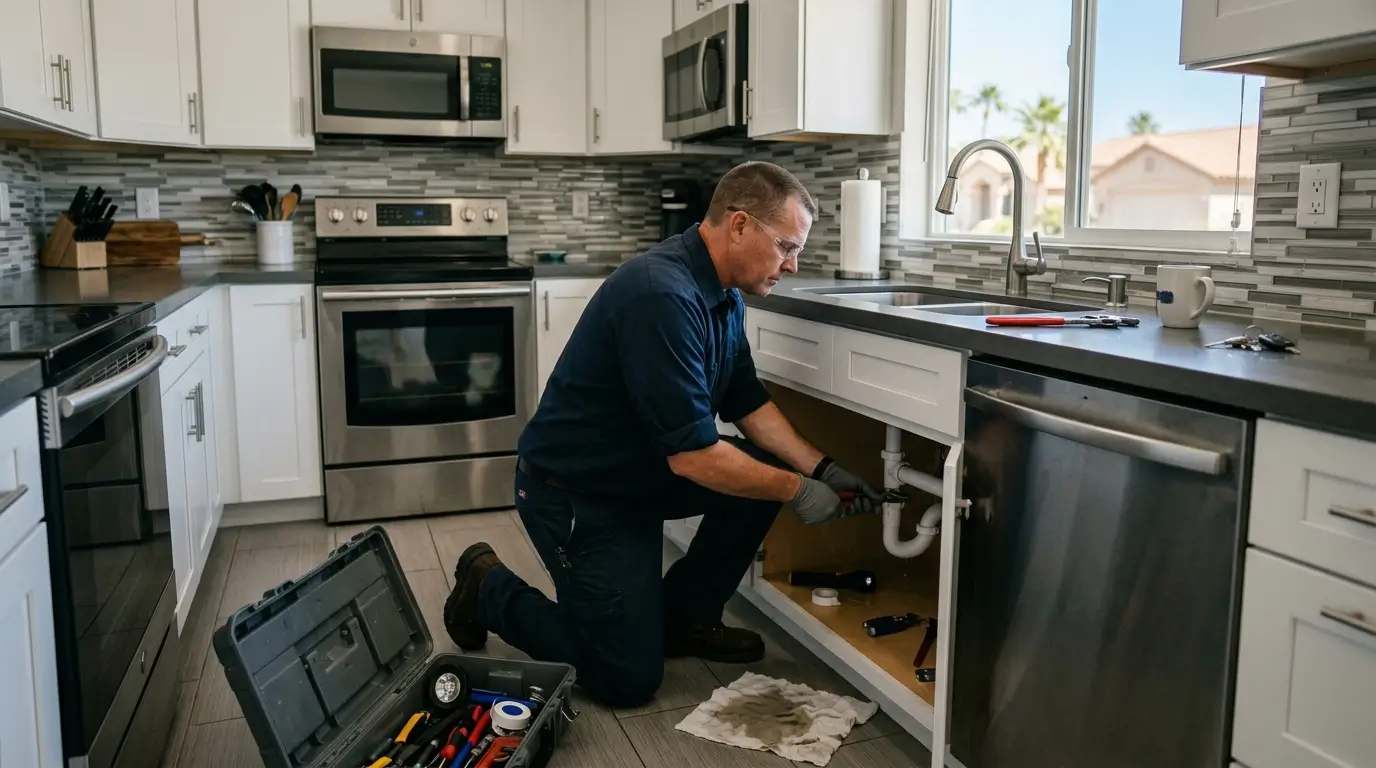
This is exactly why a slow AC response in Chandler carries more legal exposure than the same delay would in a milder climate, and it's why our maintenance team treats every reported AC failure as a priority dispatch rather than a routine work order.
The Single-Family Residence Exception
Arizona law does allow some flexibility here, but it's narrower than a lot of landlords assume. For a single-family residence specifically, a landlord and tenant may agree in writing, with adequate consideration, that the tenant will handle certain maintenance tasks, along with specified repairs, alterations, or remodeling.
Critically, this exception never extends to the core duties: code compliance and keeping the unit fit and habitable remain the landlord's responsibility regardless of what any side agreement says. Any arrangement shifting maintenance responsibilities to a tenant also has to be entered into in good faith, not as a way to sidestep the landlord's underlying obligations, and it has to be documented in writing rather than assumed informally.
What Happens If You Don't Comply
When a landlord doesn't make a required repair after proper written notice from the tenant, Arizona law gives tenants a few paths forward depending on the severity of the issue. For minor defects, a tenant can arrange the repair themselves and deduct a limited amount from rent. For essential services specifically, the remedies are broader, as described above.
In more serious cases, a landlord's ongoing noncompliance can even serve as a legal defense if that landlord later tries to pursue an eviction or collect rent, since Arizona law allows a tenant to raise the landlord's own noncompliance as a defense in that kind of action. None of these outcomes are good for a landlord's cash flow or their standing with a tenant, and all of them are avoidable with a fast, documented response the first time a legitimate repair request comes in.
FAQ
Can I have a tenant handle all repairs on a single-family rental if we agree to it in writing?
No. Even with a written agreement, code compliance and keeping the unit fit and habitable remain the landlord's non-delegable duties. Only certain other maintenance tasks can be shifted.
Is a broken air conditioner treated differently than a broken dishwasher under Arizona law?
Yes. Air conditioning is treated as an essential service, similar to heat and water, giving tenants faster and more direct remedies if it goes unaddressed compared to a standard appliance repair.
What can a tenant do if I don't fix a legitimate repair issue?
Depending on the issue, a tenant may be able to arrange the repair themselves and deduct a limited cost from rent, or in essential-service cases, secure alternative housing and deduct the cost, or raise your noncompliance as a defense if you later try to evict or collect rent.
Does this law apply the same way to a duplex or small multifamily property?
The core habitability duties apply broadly, but the specific exception allowing a tenant to take on certain maintenance tasks by written agreement is narrower for properties other than single-family residences.
Staying Ahead of Repair Obligations in a Demanding Climate
Arizona's habitability law isn't unusually complicated, but Chandler's climate raises the stakes on getting repair response right, especially anything involving cooling. Knowing exactly which duties can never be shifted to a tenant, and which essential services trigger faster remedies if they fail, protects both your properties and your legal standing.
Take a look at our property management services to see how we build fast, documented maintenance response into how we manage every property in our portfolio.
